
-
 Popular Science
Deep-sea discoveries reveal ancient secrets
Students who love ancient civilizations should know that the earliest human civilization is believed to have originated from the Sumerians in the Mesopotamian Basin. The Sumerian civilization, which invented cuneiform, is about 8,000 years old. After more than 3,000 years, it was replaced by the Babylonian civilization. However, at the end of the last century, an underwater relic discovered near the Ryukyu Islands in Japan is likely to completely subvert the cognition of human civilization.What secrets are hidden in this suspicious deep-sea relic? In the southernmost part of Japan, further south than Okinawa Island, there is a small island called Yonaguni. The island is located at the westernmost end of the Yaeyama Islands in the Ryukyu Islands. From the map, it is on the edge of the continental shelf, only one step away from Taiwan Island. Yonaguni Island has an area of about 28.88 square kilometers, a coastline of about 28 kilometers, a population of about 1,745, and an average annual temperature of 23.9℃. Due to the strong southerly wind blowing on the island all year round, the erosion of the southern coast is more obvious, and most of them are cliffs. Nishizaki in the west is the westernmost cape of Japan, and there is a monument that reads "Japan - the westernmost place - Yonaguni Island".
-
 Popular Science
The Arctic Is Melting Faster Than Expected
The Arctic could see its first ice-free summer day by 2027, exacerbating global warming and extreme weather. The Arctic could see its first summer as early as 2027, with nearly all of its sea ice melted away — a troubling milestone for the planet. For the first time, an international team of researchers, led by the University of Colorado and the University of Gothenburg in Sweden, used computer models to predict when the northernmost ocean would see its first ice-free day. An ice-free Arctic could have major impacts on ecosystems and Earth’s climate by altering weather patterns.
-
 Popular Science
Is smell your most powerful memory trigger?
Have you ever had a smell that has touched you so deeply that you still can't forget it? I believe many people have had such an experience. In fact, 75% of human emotions are closely connected to the sense of smell, which can be called a loyal guardian of memory. Each smell may carry a unique memory story, and they are like a portal in time, leading us to travel through time and space and return to the past.
-
 Popular Science
Your DNA Holds Secrets You Never Knew
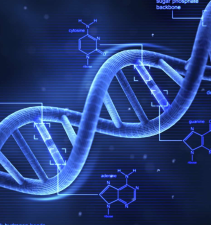
DNA, or deoxyribonucleic acid, is an important molecule that makes up human genes. However, you may never have thought that this insignificant molecule actually contains the mysteries of the universe and shapes us humans into walking USB flash drives. When exploring the nature of DNA, we will uncover an amazing fact that will make you curious about your own existence. The advantage of DNA information storage lies in its high density and long-term stability. Because the structure of DNA molecules is very compact, it can hold a large amount of information. In contrast, the amount of information that can be stored in traditional digital storage media such as hard drives or optical disks is relatively limited. In addition, DNA molecules have excellent long-term stability and can be stored for hundreds of years or even longer under appropriate storage conditions without loss or damage of information.
-
 Popular Science
Earth’s magnetic field is shifting faster than expected
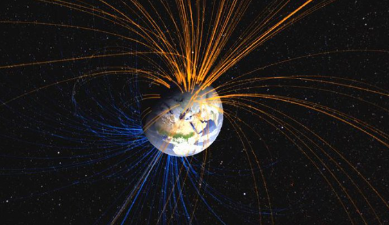
The Earth's magnetic field protects life on Earth from cosmic radiation and solar storms. If the Earth's magnetic field weakens or disappears, then the Earth's tens of millions of lives... According to a report published in the scientific journal Nature: The magnetic north pole is always moving, but the magnetic field is changing faster than scientists had previously predicted. Today's North Magnetic Pole is moving faster than expected from Canada to Siberia, Russia.
-
 Popular Science
Why Do We Dream?
Dreaming is a normal physiological phenomenon. Scientists do not yet fully understand the mechanisms behind it, but several theories explain why we dream, including memory processing, emotional release, problem-solving, physiological needs, drugs and chemicals, as well as genetics and individual differences. Dreaming is closely related to rapid eye movement (REM) sleep. During REM sleep, the brainstem reticular formation continuously emits electrical signals, and the cerebral cortex attempts to assign meaning to these random signals, forming dream narratives. At this time, the pons-medulla oblongata circuit regulates the initiation of REM sleep, the hypothalamus integrates metabolic and circadian rhythm signals, while higher brain regions such as the prefrontal cortex participate in the fine-tuning of dream content. This neural activity leads to dreams often exhibiting non-linear and weakly logical characteristics.
-
 Popular Science
The sun is entering a quieter cycle
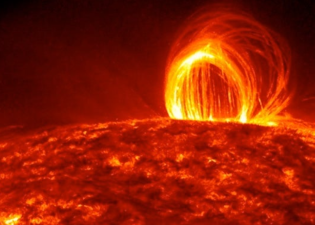
Every 11 years, the Sun enters a new cycle: the pattern of sunspots appearing and disappearing on our star marks its activity level. Each cycle is like an arched curve, with peaks (when the solar activity is the strongest and there are the most sunspots) and valleys (when the solar activity is the weakest and there are the fewest sunspots). The 25th solar cycle has begun. Scientists from NASA and the National Oceanic and Atmospheric Administration (NOAA) have confirmed that the Sun is officially nine months into this cycle. Experts believe that the new cycle may be very similar to the previous one (2008-2019), which was quite calm. However, this does not mean that this cycle is "risk-free". An international panel of experts from NASA and NOAA recently announced that the solar minimum occurred in December 2019, marking the beginning of a new solar cycle. As the solar minimum moves away from us, scientists expect that solar activity will gradually increase until reaching the next maximum in July 2025.
-
 Popular Science
Do animals actually feel emotions like humans?
Animals, like humans, also have emotional centers. Areas such as the amygdala and prefrontal cortex in the brain are considered to be the centers for the generation and regulation of emotions. These areas are responsible for controlling and regulating emotions, feelings, and behavioral responses in humans. Similarly, the brains of animals have similar structures and functions. Therefore, animals may generate and express emotions through these areas. Psychology defines emotion as subjective understanding of value relationships, neural contact, including emotional reflexes. Animal emotions can be divided into two categories. The first category is the reflex of primitive emotions, such as instinctive reactions such as fear and pleasure, which are regulated by primitive brain areas such as the brainstem and amygdala.
-
 Popular Science
Why black holes fascinate scientists
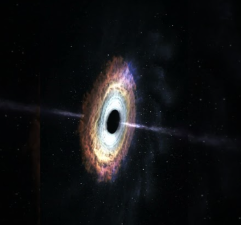
Black holes, one of the most mysterious and fascinating entities in the universe, have long inspired scientists' infinite curiosity and desire to explore. They are like invisible giants in the universe, devouring all matter and light that dare to approach, so that we can only indirectly infer their existence by observing the behavior of matter around them. A black hole is a celestial body formed by the collapse of a massive star at the end of its life. Its gravity is so strong that no matter, not even light, can escape within its event horizon. Imagine a star with a mass tens or even hundreds of times greater than that of the sun. After running out of fuel, its own gravity begins to ruthlessly squeeze matter until all matter is compressed to a tiny point, which is called a singularity. The strong gravitational field formed around the singularity is like a huge vortex, sucking everything around it in.
-
 Popular Science
Earthquakes May Soon Be Predictable
According to statistics, there are more than 5 million earthquakes in the world every year, an average of more than 10,000 earthquakes per day. Most earthquakes are small and cannot be felt by humans. There are about 10 to 20 earthquakes that can cause serious harm to humans every year. So, how are earthquakes caused? Can they be predicted? Recently, the 7.8-magnitude earthquake in Turkey and Syria has attracted worldwide attention. Experts said that the earthquake occurred at the junction of four major fault zones, with a power of about 130 atomic bombs that exploded for 43 seconds. So, how are earthquakes caused? Can they be predicted?
-
 Popular Science
Are We Alone in the Universe?
Anyone trying to answer questions like “What is life?” and “Are we alone?” is inevitably limited by what we know: the only major type of life we know of or have studied so far exists only on Earth. But life on exoplanets may look and function differently than anything ever observed before, and to continue searching for life there, we need to acknowledge our tendency to be shortsighted. Long ago, before the advent of DNA sequencing and other biotechnologies, we used to divide life into two categories: plants and animals. But we have since learned that the diversity of single-celled and multicellular organisms on this planet is astonishing. Despite this, all known life forms on Earth, including animals, plants, protists, fungi, archaea, and bacteria, share a common basic chemical structure: they are all built on a backbone of carbon atoms. It is understandable, therefore, that people assume that all organisms must be built this way—that all life is carbon-based, just like life forms in our world.
-
 Popular Science
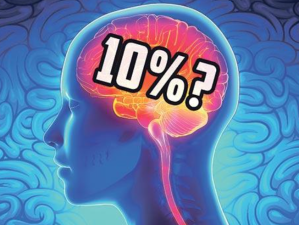
Do we really use only 10% of our brain?
Have you ever heard of the saying that humans only use 10% of their brains? This saying has been widely circulated around the world. Some people even say that even the great scientist Einstein only used 15% of his brain. Modern neuroscience research, using various techniques such as functional magnetic resonance imaging (fMRI), has confirmed that the brain is fully active in almost all activities. Even at rest, the brain maintains basal metabolism, with different areas working collaboratively; there are no large "idle" parts.
-
 Popular Science
How Smart Is Your Gut?
The human intestines are not only responsible for food processing, but also affect people's mood and health. Yes, you read that right, you have another "brain". The gut is often referred to as the body's "second brain" due to its complex nervous system and independent functions. With over 100 million neurons, the gut forms an autonomous enteric nervous system (ENS) that can independently control digestive processes, such as regulating peristalsis and secretion. Research shows that gut microbiota imbalance is associated with an increased risk of cognitive impairment and cardiovascular disease, while its function can be optimized through diet, regular sleep patterns, and probiotic supplementation, thereby improving mood and immunity.
-
 Popular Science
Is Time Travel Scientifically Possible?
Time travel is theoretically feasible. It seems absurd. But it is Einstein's theory of relativity that has led these scientists to go crazy and provided them with theoretical support. In his theory of relativity, Einstein pointed out that in our universe, time and space overlap each other. When the mass and speed of an object continue to increase, the time and space of its existence will also change accordingly. Some previous experiments have also proved its correctness. Scientists used a particle accelerator to accelerate particles to near the speed of light, and found that these particles decayed slower than other particles placed in the laboratory.
-
 Popular Science
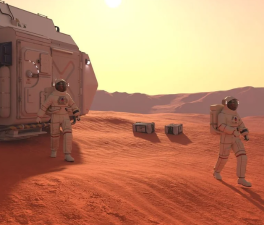
Can humans live on Mars in our lifetime?
Mars has fascinated humans for thousands of years, but only recently have we seriously considered moving there. Since the last landing on the moon in 1969, all eyes have been on the red planet and the race to reach this "other world". But will we see it in our lifetime? Today we are answering this extraordinary question; will our descendants be able to live on Mars? Do you believe it?
-
 Popular Science
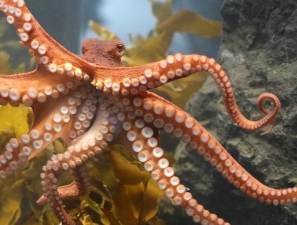
Why octopuses are smarter than we thought
There are two important reference standards for looking at the intelligence of an animal: brain-body ratio and number of neurons. Octopuses also have brains, and their brains are also in their heads. If we simply look at the ratio of the brain in the head to the body, the octopus will be weak, because the largest part of its body is actually its tentacles. However, one thing needs to be noted, that is, the intelligence of the brain is related to the number of neurons. Our human neurons are concentrated in the brain, but the octopus's brain actually has only 40% of neurons, and the remaining 60% of neurons are in its 8 tentacles.
-
 Popular Science
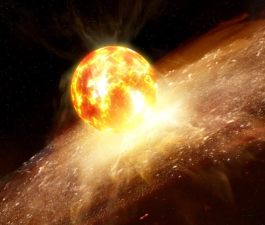
What Happens When a Star Dies?
Stars make up more than 99.9% of the visible material world. When we look up at the Milky Way, 99.99% of the stars that come into view belong to those huge celestial bodies that emit light and heat - stars. They are the homes of planets and the craftsmen who create miracles in the universe. How does the end of the life of celestial bodies happen? Any celestial body, no matter how big or small, will eventually face extinction. When a star dies, the nuclear fusion reaction in its core ceases, and it can no longer produce energy to resist its own gravity, leading to drastic changes in the star's structure. The specific process and outcome of a star's death largely depend on its initial mass.